
Beyond Rituals: Why Agile Training Must Focus on Mindset and Culture
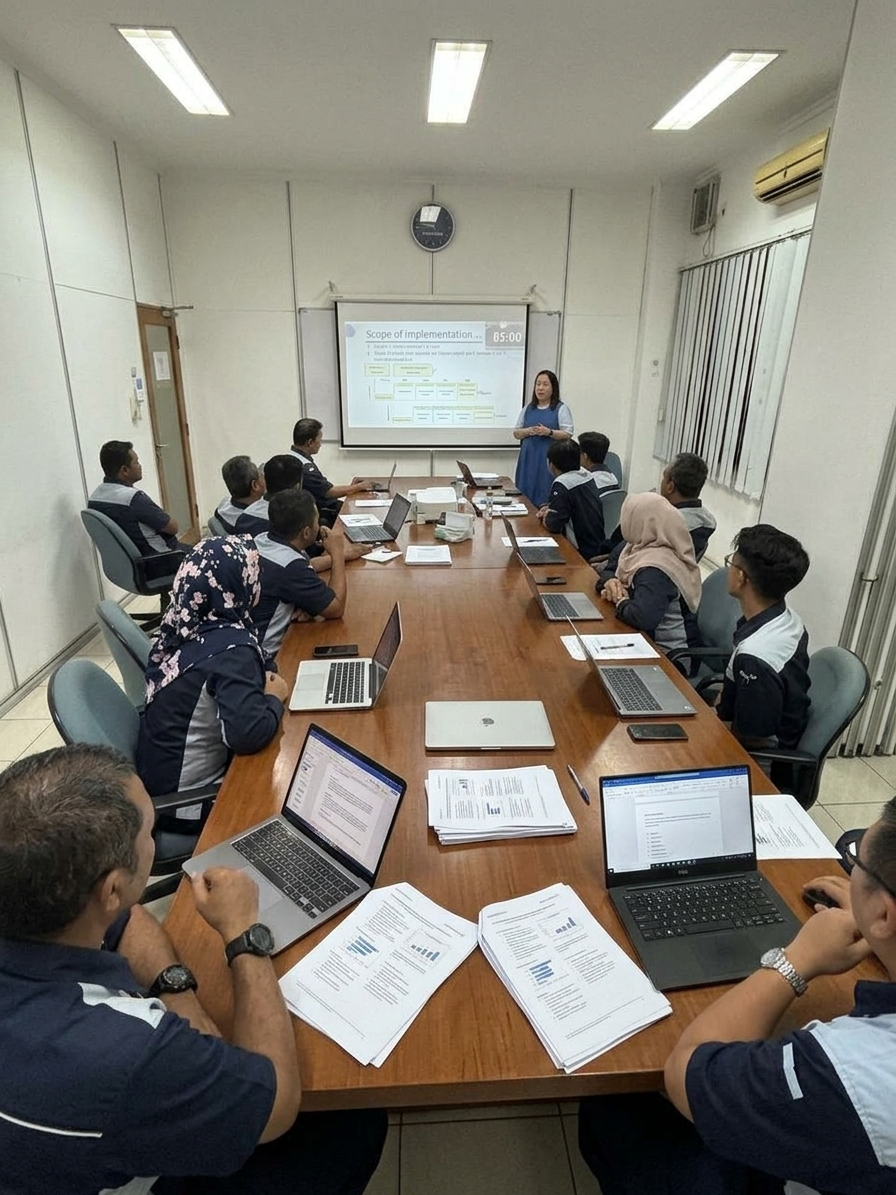
On May 20, 2026, PT Torishima Pump Manufacturing Indonesia and PT Geteka Founindo launched an Agile Training program to move beyond “Doing Agile” (performing rituals like daily stand-ups) toward “Being Agile.” Many organizations struggle with slow execution despite adopting these frameworks because they fail to align methodology with cultural transformation. More Than Just a Technical Framework In collaboration with Torishima Pump Japan, our training emphasizes shifting from a Fixed Mindset to a Growth Mindset—treating failure as data for continuous improvement. Agile is not just about task management; it is about trusting people, breaking down silos, and responding rapidly to change. The Three Pillars of Agile Culture To overcome resistance, Agile training must focus on three fundamental shifts: Servant Leadership: Moving from “Command & Control” to empowering teams to make decisions at the operational level. Psychological Safety: Creating an environment where employees can experiment and speak honestly without fear. Customer-Centricity: Shifting focus from departmental tasks to delivering maximum value to the customer. Cultural Transformation Matrix Old Culture Agile Intervention New Culture Bureaucratic/Slow Empowering self-organizing teams Agile & Adaptive Blame Culture Objective Retrospectives Innovative & Bold Silo Mentality Cross-functional alignment Transparent & Collaborative Rigid Planning Iterative market responsiveness Resilient Conclusion: Agile transformation is a cultural journey, not just a project management implementation. By focusing on mindset, we build a resilient, adaptive organization ready to lead in an uncertain market. © MKT-TPMI-2026